
Key Takeaways
- Arbitrage trading exploits price differences across crypto exchanges.
- The UAE's regulatory environment is evolving, requiring careful compliance.
- Risk management is crucial to protect your capital.
- Several crypto exchanges cater specifically to the UAE market.
- Staying informed about market trends is essential for success.
Crypto Arbitrage Trading in the UAE: Your 2026 Guide
The United Arab Emirates (UAE) has emerged as a significant hub for cryptocurrency adoption and innovation. As of 2024, approximately 10% of UAE residents hold some form of cryptocurrency, according to a recent survey by a local financial institution. This growing interest, coupled with the UAE's favorable regulatory environment for digital assets, makes crypto arbitrage trading an appealing strategy for investors looking to capitalize on market inefficiencies. This guide provides a comprehensive overview of crypto arbitrage trading in the UAE, focusing on the opportunities and challenges that lie ahead in 2026.
For more information on Crypto Arbitrage Trading in the UAE: Your 2026 Guide in United Arab Emirates, visit this recommended local resource.

Understanding Crypto Arbitrage
Crypto arbitrage involves exploiting price discrepancies of the same cryptocurrency across different exchanges. These price differences can arise due to various factors, including varying trading volumes, exchange fees, and regional demand. Arbitrageurs buy the cryptocurrency on the exchange where it is cheaper and simultaneously sell it on the exchange where it is more expensive, profiting from the difference.
Types of Crypto Arbitrage
- Spatial Arbitrage: Buying crypto on one exchange and selling it on another.
- Triangular Arbitrage: Exploiting price differences between three different cryptocurrencies on the same exchange.
- Exchange Arbitrage: Taking advantage of price differences for the same asset across different exchanges.
The UAE Crypto Landscape: Opportunities and Challenges
The UAE has positioned itself as a forward-thinking nation in the digital asset space. The Securities and Commodities Authority (SCA) has been actively developing a regulatory framework for cryptocurrencies, aiming to foster innovation while protecting investors. However, this evolving landscape also presents challenges.
Regulatory Environment in the UAE
The UAE's regulatory approach to cryptocurrencies is still developing. While there is no blanket ban on cryptocurrencies, businesses dealing with digital assets must comply with anti-money laundering (AML) and know-your-customer (KYC) regulations. The SCA is expected to release more comprehensive regulations by 2026, which could impact arbitrage trading strategies. Always stay updated on the latest guidelines from official sources like the Central Bank of the UAE and the SCA.
Popular Crypto Exchanges in the UAE
Several cryptocurrency exchanges operate in the UAE, offering various trading pairs and services. Some of the popular exchanges include:
- Rain Financial: A Bahrain-based exchange with a strong presence in the UAE.
- BitOasis: One of the oldest and most established crypto exchanges in the Middle East.
- CoinMENA: Another popular exchange catering to the MENA region.
- Binance: Global exchange with services available in the UAE.
Challenges of Arbitrage Trading in the UAE
Arbitrage trading is not without its challenges. In the UAE, these challenges include:
- Exchange fees: Transaction fees on exchanges can eat into potential profits.
- Transaction speed: Delays in transaction processing can result in missed opportunities.
- Regulatory uncertainty: Evolving regulations can impact trading strategies.
- Market volatility: Sudden price swings can lead to losses.
Strategies for Crypto Arbitrage in the UAE (2026)
To succeed in crypto arbitrage in the UAE, traders need to adopt effective strategies that account for local market conditions and regulations.
Spatial Arbitrage Strategies
Spatial arbitrage involves identifying price differences for the same cryptocurrency on different exchanges and executing trades to profit from the difference. For example, if Bitcoin is trading at AED 150,000 on BitOasis and AED 151,000 on Rain Financial, an arbitrageur can buy Bitcoin on BitOasis and sell it on Rain Financial, making a profit of AED 1,000 per Bitcoin (minus transaction fees).
Triangular Arbitrage Strategies
Triangular arbitrage involves exploiting price differences between three different cryptocurrencies on the same exchange. This strategy requires careful analysis of currency pairs and quick execution to capitalize on fleeting opportunities. For instance, if AED/BTC, BTC/ETH, and ETH/AED prices are misaligned, a trader can convert AED to BTC, then BTC to ETH, and finally ETH back to AED, profiting from the price discrepancies.
Automated Trading Bots
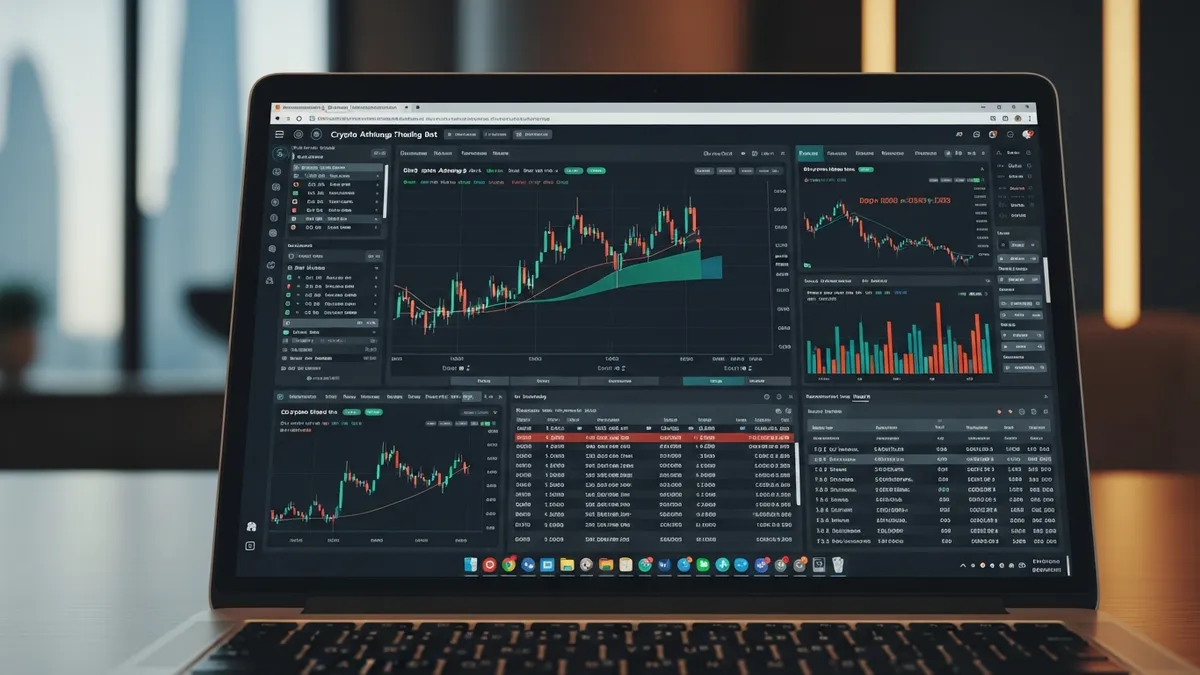
Many arbitrageurs use automated trading bots to execute trades quickly and efficiently. These bots can monitor multiple exchanges simultaneously and automatically execute trades when price differences are detected. However, it’s important to choose a reputable bot and carefully configure its settings to minimize risks. Several platforms offer arbitrage bots tailored for the crypto market, but always conduct thorough research before using one. Ensure the bot complies with UAE regulations and security standards.
Risk Management in Crypto Arbitrage
Risk management is paramount in crypto arbitrage trading. The volatile nature of cryptocurrencies and the complexities of arbitrage trading can expose traders to significant risks.
Key Risks to Consider
- Execution Risk: The risk that a trade cannot be executed at the desired price due to market movements or exchange issues.
- Liquidity Risk: The risk that there is not enough liquidity on the exchanges to execute the trades.
- Regulatory Risk: The risk that changes in regulations can impact the profitability of arbitrage strategies.
- Counterparty Risk: The risk that one of the exchanges defaults or experiences technical issues.
Risk Mitigation Techniques
- Hedging: Using derivatives or other instruments to offset potential losses.
- Diversification: Spreading capital across multiple exchanges and cryptocurrencies.
- Stop-Loss Orders: Setting automatic sell orders to limit potential losses.
- Due Diligence: Thoroughly researching exchanges and cryptocurrencies before trading.
Choosing the Right Crypto Exchanges in the UAE
Selecting the right crypto exchanges is crucial for successful arbitrage trading. Traders should consider factors such as fees, liquidity, security, and regulatory compliance.
| Exchange | Fees (Maker/Taker) | Liquidity | Security | Regulatory Compliance |
|---|---|---|---|---|
| Rain Financial | 0.1% / 0.25% | Moderate | High | Compliant with Bahrain Central Bank regulations |
| BitOasis | 0.2% / 0.3% | High | High | Compliant with UAE regulations |
| CoinMENA | 0.15% / 0.25% | Moderate | High | Compliant with Bahrain Central Bank regulations |
Before selecting an exchange, compare their offerings and make sure they align with your trading strategy and risk tolerance. Consider factors like the number of trading pairs offered, the exchange's reputation, and the level of customer support provided.
Tax Implications of Crypto Arbitrage in the UAE
Understanding the tax implications of crypto arbitrage is crucial for compliance with UAE regulations. As of 2024, the UAE does not have specific tax laws for cryptocurrencies. However, this may change by 2026 as the regulatory landscape evolves. It's essential to consult with a tax advisor to understand how your crypto trading activities will be taxed.
VAT on Crypto Transactions
Value Added Tax (VAT) is a consumption tax levied on most goods and services in the UAE. While the applicability of VAT to crypto transactions is still evolving, it’s important to keep abreast of any updates from the Federal Tax Authority (FTA). As of now, gains from crypto trading are generally not subject to VAT, but this could change.
Corporate Tax Considerations
If you are conducting crypto arbitrage trading through a registered company in the UAE, you will need to consider corporate tax implications. The UAE introduced a corporate tax regime in 2023, which applies to businesses with taxable income exceeding AED 375,000. Consult with a tax professional to determine how this applies to your crypto trading activities.
Future Trends in Crypto Arbitrage in the UAE (2026)
The future of crypto arbitrage in the UAE is likely to be shaped by technological advancements, regulatory developments, and evolving market dynamics.
Increased Automation
Automated trading bots will become even more sophisticated, using artificial intelligence (AI) and machine learning (ML) to identify and execute arbitrage opportunities more efficiently. This will require traders to develop more advanced strategies to stay ahead of the competition.
Regulatory Clarity
The UAE is expected to provide greater regulatory clarity for cryptocurrencies by 2026. This will reduce uncertainty and attract more institutional investors to the market, potentially leading to increased liquidity and arbitrage opportunities.
Integration with Traditional Finance
Cryptocurrencies are likely to become more integrated with traditional financial systems in the UAE. This could lead to new arbitrage opportunities between crypto exchanges and traditional financial markets.
Tools and Resources for Crypto Arbitrage Traders in the UAE
To succeed in crypto arbitrage, traders need access to reliable tools and resources. Here are some essential tools and resources for crypto arbitrage traders in the UAE:
- Crypto Exchange APIs: APIs (Application Programming Interfaces) allow traders to access real-time market data and execute trades programmatically.
- TradingView: A popular charting platform that provides real-time price data and technical analysis tools.
- Crypto Arbitrage Scanners: Software tools that scan multiple exchanges for arbitrage opportunities.
- News and Analysis Websites: Websites like CoinDesk and CoinTelegraph provide up-to-date news and analysis of the cryptocurrency market.
| Tool/Resource | Description | Use Case |
|---|---|---|
| CoinGecko API | Provides real-time crypto price data from various exchanges. | Monitoring price discrepancies for arbitrage opportunities. |
| TradingView | Charting platform with technical analysis tools. | Analyzing price trends and identifying potential entry and exit points. |
| Nomics API | Offers historical and real-time crypto market data. | Backtesting arbitrage strategies and analyzing market trends. |
Legal and Compliance Considerations
Navigating the legal and compliance landscape is crucial for crypto arbitrage traders in the UAE. Compliance with AML and KYC regulations is essential to avoid legal issues.
AML and KYC Regulations
All crypto exchanges operating in the UAE are required to comply with AML and KYC regulations. This means that traders must verify their identity and provide information about the source of their funds. Failure to comply with these regulations can result in fines and other penalties. Refer to official guidelines from the Central Bank of the UAE regarding AML and KYC compliance.
Data Privacy
Traders must also comply with data privacy regulations, such as the UAE’s Personal Data Protection Law. This law protects the privacy of individuals’ personal data and requires businesses to implement appropriate security measures to protect this data. Always ensure that you are handling user data responsibly and in compliance with applicable laws.
Conclusion
Crypto arbitrage trading in the UAE presents lucrative opportunities for investors who are willing to navigate the complexities of the market. By understanding the regulatory landscape, adopting effective trading strategies, and managing risks carefully, traders can potentially generate significant profits. However, it’s important to stay informed about market trends and regulatory developments to remain competitive. As the UAE continues to embrace digital assets, the future of crypto arbitrage looks promising, but requires diligent navigation and compliance.
FAQ
Is crypto arbitrage legal in the UAE?
Yes, crypto arbitrage is legal in the UAE, provided that traders comply with all applicable laws and regulations, including AML and KYC requirements.
What are the main risks of crypto arbitrage?
The main risks of crypto arbitrage include execution risk, liquidity risk, regulatory risk, and counterparty risk. Effective risk management techniques are essential to mitigate these risks.
How do I choose the right crypto exchange for arbitrage trading?
Consider factors such as fees, liquidity, security, and regulatory compliance when choosing a crypto exchange for arbitrage trading. Compare different exchanges and select one that aligns with your trading strategy and risk tolerance.
What are the tax implications of crypto arbitrage in the UAE?
The tax implications of crypto arbitrage in the UAE are still evolving. It’s important to consult with a tax advisor to understand how your crypto trading activities will be taxed.
Do I need a license to conduct crypto arbitrage in the UAE?
Currently, there is no specific licensing requirement for individuals conducting crypto arbitrage in the UAE. However, if you are operating a business that deals with digital assets, you may need to obtain a license from the relevant authorities.
Disclaimer: This guide is for informational purposes only and does not constitute financial or legal advice. Crypto trading involves significant risks, and you should consult with a qualified professional before making any investment decisions. Always conduct thorough research and understand the risks involved before engaging in crypto arbitrage trading.